
Blog / Seating
Big & Tall Office Chairs: How to Read Weight Capacity
Most office chairs stop at 275 lb. Here’s what that number means, and when to choose a chair rated higher.
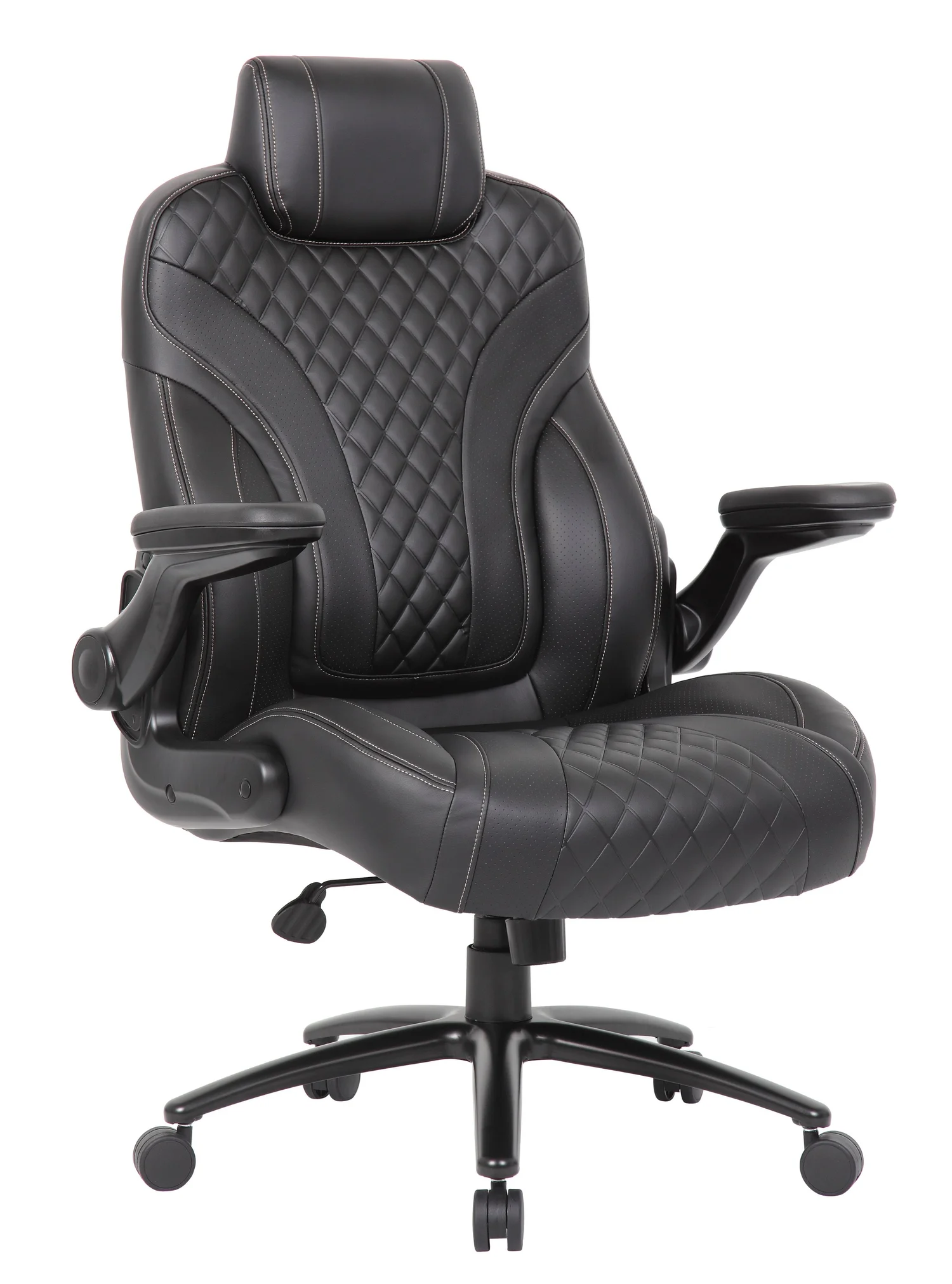
Check a chair’s weight rating first, then its seat width. Most office chairs are rated to 275 lb, and that covers most people. It does not cover everyone, and it does not cover every kind of use.
If the chair is for someone above 275 lb, is shared across shifts, or sits in a waiting room where anyone can use it, choose a chair rated higher. Here’s what the number means, what makes a chair truly heavy duty, and which chairs we carry above the standard rating.
Why so many chairs stop at 275 lb
The 275 lb figure comes from the main US test standard for office chairs. ANSI/BIFMA X5.1 was revised in 2017 to test for a 275 lb user, up from 253 lb. That weight covers the 95th percentile of North American men.
BIFMA writes separate standards for heavier users:
| Standard | Covers | User weight |
|---|---|---|
| ANSI/BIFMA X5.1 | General-purpose office chairs | Up to 275 lb |
| ANSI/BIFMA X5.11 | Large occupant office chairs | Up to 400 lb |
| BIFMA HCF 8.2 | Healthcare patient seating | Classes up to 600 lb |
A rating on a product page is the maker’s claim. BIFMA itself warns buyers against ratings based only on a static load, meaning one heavy weight set on a still seat. Real chairs take movement: dropping into the seat, leaning back, swiveling all day. When the rating matters, ask which test the number comes from.
What makes a chair heavy duty
A higher number only means something if the parts behind it are built for the load. Look at these on any big & tall chair:
- Base. A metal base with a wide footprint spreads the load and resists tipping.
- Gas cylinder. It carries the whole load every time someone sits down. Heavy-duty chairs use a stronger cylinder.
- Seat width and depth. The rating says what the chair can carry. The seat size says whether the person fits. A strong chair that is too narrow is still the wrong chair.
- Arms. Measure between the arms, not only the seat. Fixed arms on a heavy-duty frame are often the sturdiest choice.
- Casters. Larger casters roll more easily under load and wear the floor less.
Use matters as much as the user
One person in one chair for eight hours is the lightest job a chair does. The same chair shared across three shifts sees three times the cycles and every body type on the team. Waiting rooms and reception seating are harder again, because anyone can sit in them.
Our rule: for shared, round-the-clock or public seating, go above 275 lb even when no single user needs it.
Heavy-duty seating at Kalico
77 of the Boss chairs on our site carry the standard 275 lb rating. When you need more, these three step up, placed where their rating sits.
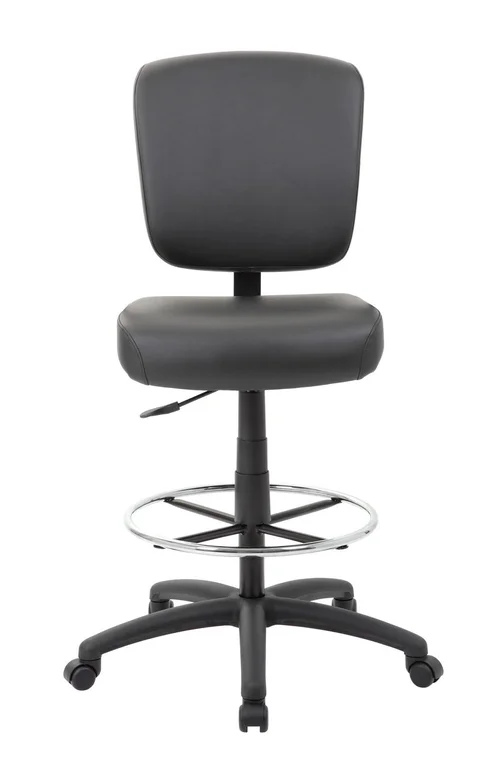 300 lbHeavy Duty Office Stool, $201.82
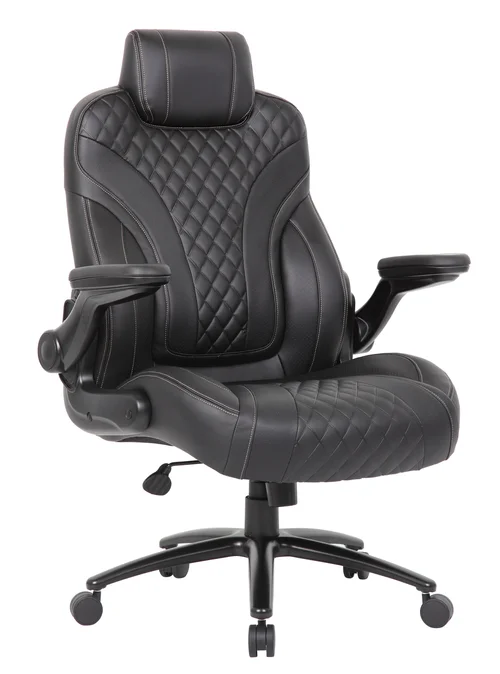 400 lbHeavy Duty Executive Chair, $730
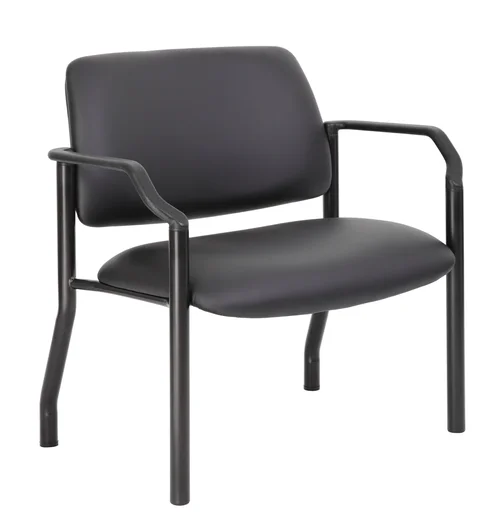 500 lbAntimicrobial Guest Chair, $370
The 500 lb guest chair is the one we point to most for shared seating. Its antimicrobial vinyl wipes down with clinical disinfectant between visitors.
Before you order
- Leave headroom. Pick a rating above the heaviest person who will use the chair.
- Measure the seat. Check seat width and the space between the arms, not only the rating.
- Ask for the test. Find out which standard the rating comes from.
- Count shifts. A shared chair needs a higher rating than a personal one.
- Sit in it. Try one before you order a dozen.
Sit in one before you order a dozen
Most of these chairs are on our showroom floor at 15703 E. Valley Blvd, City of Industry. Open Monday to Friday, 9AM to 6PM, and Saturdays by appointment. Add any chair to your quote list as you browse, or call and we’ll help you match the rating to the room.